| Arrows: Spine... from .30 inch to over 1 inch in deflection. The higher the bow weight the more deflection. Techniques Tips Dial test indicator Spine Testers FMP GO Template Install GO on your IOS device and Use this template to Select Arrows The measurable "power" of your bow - it's total kinetic energy output - ultimately depends upon just two variables: the mass of the arrow and the speed of the arrow. Kinetic energy of an arrow can be found by using the formula KE=(mv²)/450,240 where m = mass of the arrow in grains and v = velocity of the arrow in fps. If your bow setup ultimately shoots a 400 grain arrow at a respectable 250 fps (a typical field-output for a modern rig), your actual kinetic energy or "power" will be: The Archery Trade Association standard for measuring arrow spine requires this test: Suspend a 1.94-pound weight at the shaft’s center, and use a machine to measure the deflection or bend at that point. Deflection is measured in inches. Some typical deflection measurements are .500, .400 and .350. These measurements correspond to the spine sizes most manufacturers use to mark arrows. Easton Arrow Data For Reference....
Archery Grains Scale Calculator FPS to MPH |
Archery Software: Spine Selector Archers Advantage On Target Pinwheel Software Calculators:
Compound Bow Speed database The faster an arrow travels, the flatter the flight trajectory and less deviation from wind. Recurve bow arrows can travel up to 225 feet per second (fps) or 150mph while compound bow arrows can travel up to 300fps (200mph). OCEN Audio app 60/.214=280.373832fps (this a compound bow)
|
"i have a traditional shooter that finished 4th in the ibo world last year . he used to shoot a black widow . he changed bows this year and i think its a samick he shoots a 375 grain arrow both for competition and hunting and does real well . he gets 214fps out of it . hes big time into light arrow vs heavy arrow on many forums .has a couple arrow penetration videos on youtube did them at my shop ." | ![]() |
||||||||||||||||||||||||||||
| The
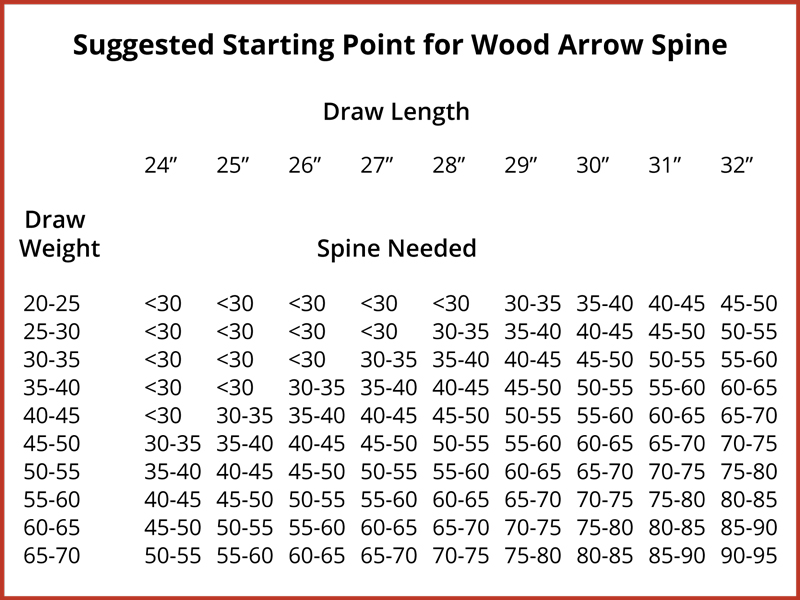
first variable you need to look at is draw weight. As draw weight
increases, so should arrow rigidity (spine). Also, we strongly recommend
that you use an arrow with at least 5 grains of weight per pound or draw weight (if you are shooting a 60 lb. bow, you should use and arrow of not less than 300 grains). Speed Test Video With Physics Recurve Bow 60% efficient Compound Bow 90% effieient Chrony Ebay Chronographs Amazon Chronographs 28lb 137 fps Recurve 290-330 FPS Compound Bow 340 fps CROSSBOW 420-450 FPS FOC stands for Front of Center balance point. This measurement results from the relative weights of the components used in the arrow: shaft, insert, point, fletching and nock. A properly balanced arrow measurements of 7 to 15%. For more information on understanding arrow weight and FOC |
|
To answer that, let’s take a look at Easton’s Kinetic Energy Hunting Chart:
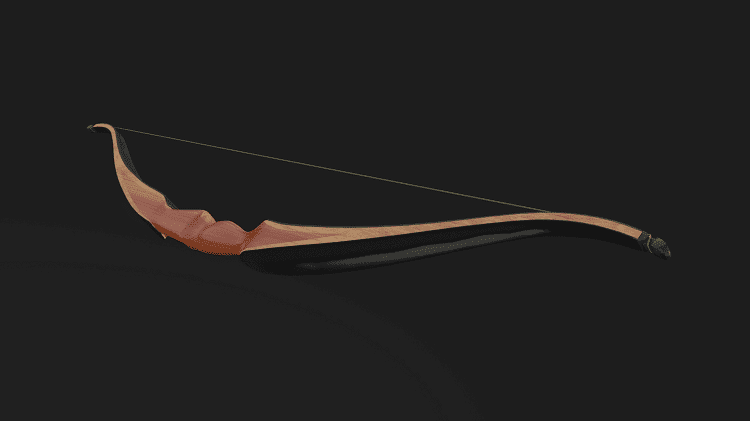
Below is a table of results for speed testing of Green Man Longbows. Click on the bow type for photos of that bow.
Bow Type | Gallery Number | Wood | Between Nocks | Draw Length | Draw Weight | Speed ( FPS ) | Speed Above Weight | |
1 | English Longbow | 018 | Pacific Yew | 72" | 28" | 38lb | 172 | 34 |
2 | Mongol Bow * | 063 | Horn, Yew, Sinew | 48" | 28" | 27lb | 159 | 32 |
| 3 | English Longbow | 040 | Pacific Yew | 72" | 28" | 47lb | 177 | 30 |
| 4 | Composite Flat bow | 013 | Sinew backing, Pacific yew | 66" | 28" | 45lb | 173 | 28 |
| 5 | Laminated Longbow | 028 | Hickory, Purpleheart, Rosewood | 71" | 28" | 33lb | 156 | 23 |
| 6 | Laminated Longbow | 039 | Hickory, Purpleheart, Lemonwood | 74" | 28" | 50lb | 171 | 21 |
| 7 | Laminated Longbow | 022 | Hickory, Lemonwood, Bloodwood | 76" | 28" | 52lb | 173 | 21 |
| 8 | 055 | Buffalo horn, Bamboo, Sinew | 51" | 28" | 40lb | 160 | 20 | |
| 9 | Laminated Longbow | 037 | Hickory, Yew (Take Down) | 73" | 28" | 45lb | 165 | 20 |
| 10 | English Longbow | 006 | Pacific Yew | 75" | 28" | 55lb | 175 | 20 |
| 11 | 059 | Pacific Yew | 74" | 28" | 54lb | 173 | 19 | |
| 12 | English Longbow | 036 | Pacific Yew | 75" | 28" | 44lb | 163 | 19 |
| 13 | Laminated longbow | 033 | Hickory, Purpleheart, Lemonwood | 76" | 31" | 64lb | 183 | 19 |
| 14 | 043 | Pacific Yew | 72" | 28" | 47lb | 165 | 18 | |
| 15 | English Longbow | 017 | Pacific Yew | 79" | 32" | 47lb | 165 | 18 |
| 16 | Laminated Longbow | 093 | Hickory, Lemonwood, Snakewood | 74" | 28" | 37lb | 155 | 18 |
| 17 | Laminated Longbow | 041 | Ash, Lemonwood, Bloodwood | 75" | 28" | 40lb | 158 | 18 |
| 18 | Laminated Longbow | 015 | Hickory, Purpleheart, Lemonwood | 72" | 28" | 45lb | 163 | 18 |
| 19 | Laminated Longbow | 029 | Hickory, Purpleheart, Osage | 74" | 29" | 52lb | 170 | 18 |
| 20 | Lemonwood Longbow | 020 | Lemonwood (single piece) | 74" | 28" | 39lb | 157 | 18 |
| 21 | English Longbow | 000 | Pacific Yew | 68" | 25" | 43lb | 160 | 17 |
| 22 | Laminated Longbow | 032 | Hickory, Purpleheart, Lemonwood | 72" | 28" | 44lb | 161 | 17 |
| 23 | Laminated Longbow | 031 | Bamboo, Yew | 73" | 28" | 45lb | 162 | 17 |
| 24 | Laminated Longbow | 023 | Hickory, Purpleheart, Rosewood | 75" | 28" | 32lb | 149 | 17 |
| 25 | Lemonwood Longbow | 016 | Lemonwood (single piece) | 75" | 28" | 41lb | 158 | 17 |
| 26 | 044 | Pacific Yew | 74" | 28" | 39lb | 155 | 16 | |
| 27 | English Longbow | 027 | Pacific Yew | 68" | 27" | 44lb | 160 | 16 |
| 28 | Laminated Longbow | 014 | Hickory, Purpleheart, Lemonwood | 74" | 28" | 36lb | 151 | 15 |
| 29 | English Longbow | 101 | Bamboo, Purpleheart, Lemonwood | 74" | 27" | 51lb | 165 | 14 |
| 30 | English Longbow | 046 | Pacific Yew | 74" | 28" | 46lb | 157 | 11 |
| 31 | Laminated Longbow | 029 | Hickory, Purpleheart, Lemonwood | 72" | 28" | 25lb | 136 | 11 |
| 32 | Laminated Longbow | 092 | Hickory,lemonwood, yew | 74" | 28" | 55lb | 166 | 11 |
| 33 | English longbow | 108 | Pacific Yew | 74" | 27" | 40lb | 151 | 11 |
| 34 | English Longbow | 097 | Pacific Yew | 74" | 27" | 50lb | 161 | 11 |
| 35 | Laminated Longbow | 030 | Bamboo, Hickory, | 75" | 28" | 29lb | 137 | 8 |
| 36 | English Longbow | 090 | Pacific Yew | 74" | 28" | 52lb | 159 | 7 |
| 37 | English Longbow | 102 | Pacific Yew 'Silver Dragon' | 72" | 26" | 40lb | 141 | 1 |
290-330 FPS. The classic bow requires a lot of kinetic energy that’s supplied by the archer, and that’s a good thing.
It makes every single shot customizable, and actually trains your endurance and muscles to withstand more arrow shots.
Recurves offer more health benefits than compound and crossbows, and for the human element present in successful high-FPS arrow shots, it’s a lot more skillful to be able to shoot one of these successfully.

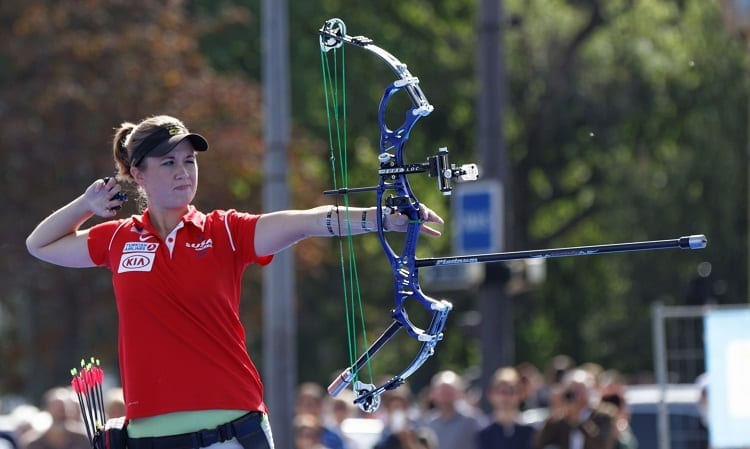
330-350 FPS.Compound bows are preferred by hunters for multiple reasons.
It’s the perfect in-between for recurves and crossbows, because it makes things a little bit easier with a let-off.That means you can pull the string back with 75-80% less force than you’re outputting thanks to the pulley and lever system.
This bit of leeway gives a compound bow a higher average FPS, and with modern innovations in its design, it supersedes the recurve just a little bit.

420-450 FPS. Yes, that’s the average. The point of crossbows is to hunt, and in hunting, you need to be as humane as possible. There’s a reason why there are minimum requirements for draw weight; anything too low would be torturing, not hunting. With a 450 FPS draw weight, you could easily take down large targets with pinpoint accuracy.